Зміст
Why do companies need fleece jackets in the cold season
Fleece jackets have become one of the most popular elements of corporate warm clothing, especially in teams working outdoors or in rooms with unstable temperatures. In the cold season, they perform several important functions: provide thermal comfort, create a professional appearance and strengthen the corporate identity of the brand. Unlike classic sweaters or hoodies, fleece clothing has a unique structure that retains heat without adding weight. This makes it optimal for active work.
Companies working in the field of logistics, delivery, construction, security, outdoor formats, service and even HoReCa actively order fleece jackets for staff. They are light, dry quickly, do not restrict movement and retain heat even at high humidity. Staff do not need to wear massive winter items that interfere with work tasks – enough fleece jacket as a middle or top layer.
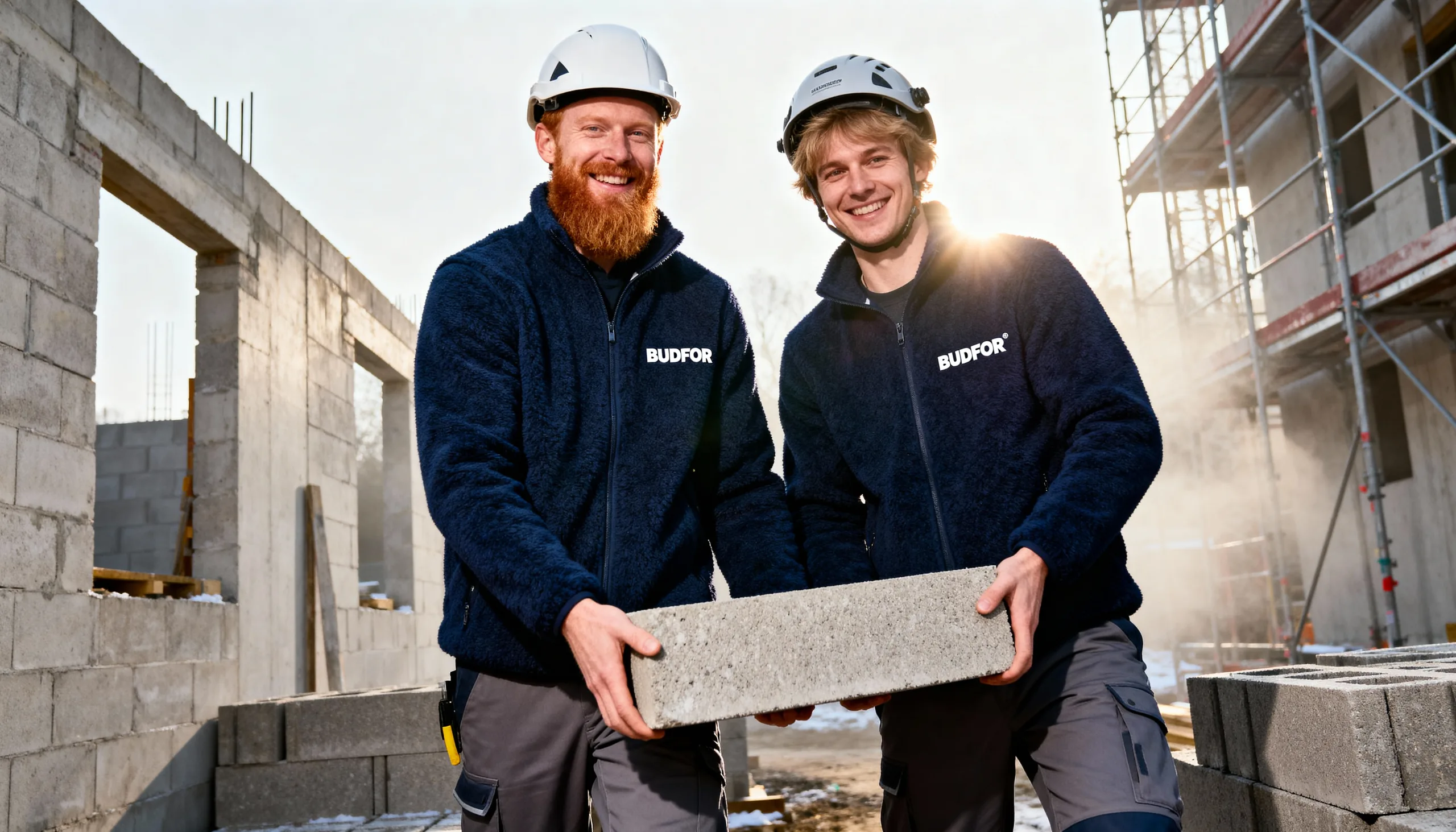
Another important factor is corporatism. Branded fleece sweaters make the team recognizable in all conditions. This is especially important for delivery, technical services, security companies and network facilities operating in large cities. A single staff style increases customer trust and creates a visual integrity of the brand, even when people work outdoors.
In the cold season, fleece jackets become not just an item of clothing, but a necessity – it is a tool that maintains the performance and comfort of staff.
What are fleece sweaters and what are their differences
There are several main types of fleece jackets on the market, each of which is suitable for different working conditions. Understanding the difference helps companies choose the right model for the temperature, activity level and style of corporate form.
1. Classic zipper fleece jackets
This is the most versatile option. They are comfortable, easy to wear over a T-shirt or sweater, have a stand-up collar and a full clasp. Suitable for logistics, technical teams, warehouses, delivery, security and field craftsmen.
2. Fleece polo sweaters
More restrained and “office” option. They combine the warmth of fleece and the look of a classic polo shirt. Suitable for administrators, medical centers, couriers, employees of information centers and those who need a more formal style.
3. Fleece skinny
Comfortable, warm, with a hood – popular among IT teams, service staff, outdoor companies and brands with informal culture. They look more casual, but perfectly protect from the cold.
4. Fleece vests
optimal for off-season or physically active work. The fleece vest does not restrain the hands, but retains the heat of the body. It is often ordered for craftsmen, couriers, sales consultants, warehouses.
5. Thickened fleece jackets (Heavy Fleece)
These are the warmest models for subzero temperatures. They have dense fleece, reinforced inserts and sometimes windproof elements.
The main difference between fleece jackets is in warmth, cut and purpose. Companies choose models depending on working conditions: from light office polos to thickened fleece jackets for cold and outdoor work.
Density and types of fleece: how to choose quality fleece jackets
Fleece differs in density, type of weaving and quality of fibers. It is these characteristics that determine how warm, durable and comfortable fleece jackets will be. When ordering, it is important to consider three main parameters: density, structure and type of thread.
1. The density of fleece
Fleece happens:
- 180–220 g / m2 – light, suitable as a middle layer or for work in warm rooms;
- 240–280 g / m2 – universal, the most popular option for corporate clothing;
- 300–360 g / m2 – warm fleece for outdoor work;
- 400+ g / m2 – Heavy Fleece for extreme cold.
For most businesses, models 240-300 g / m2 are optimal – they combine heat, flexibility and wear resistance.
2. Types of fleece
- MicroFleece – Thin, soft, for light jackets.
- Classic Fleece – standard option for fleece jackets.
- Polar Fleece – warmer and denser.
- Double Fleece – Two-layer, for severe cold.
- Strong fleece with anti-peeling – Resistant to spools, important for everyday use.
3. Processing and anti-score stability
High-quality fleece sweaters have an anti-peeling coating that prevents the formation of spools after washing. This is critical for corporate clothing, which is often washed and used daily.
The correct choice of density and type of fleece allows you to create clothes that retain heat, appearance and shape even after prolonged wear in different conditions.
Branding: How to apply a logo to fleece sweaters
Fleece is a specific material for branding because it has a loose texture. But in 2025, there are technologies that allow you to apply the logo neatly, clearly and durable. This makes fleece jackets and fleece jackets a full-fledged corporate clothing that works on brand awareness.
1. Machine embroidery
The most stable option. The embroidery looks three-dimensional, expensive and can withstand any load. Especially good for medium and high density fleece. The logo is not erased or burned out, which is critical for outdoor teams.
2. Thermal printing (flex/flock)
Suitable for small logos or inscriptions, but not for very large areas. Flex gives a smooth film, flock – a velvety effect. The method is suitable for corporate orders of medium volume, but less stable than embroidery.
3. Chevrons and stripes
The ideal solution for fleece: the logo is embroidered on a separate plate, which is then sewn or glued to the jacket. This gives the best quality and durability.
The main recommendation: for fleece jackets it is best to choose machine embroidery or chevrons, because they can withstand intense wearing and do not lose quality.
Fittings and cut options: what affects the comfort of employees
Cut and fittings are what determines not only the appearance, but also the convenience of wearing fleece clothes during work shifts. For corporate use, it is important that fleece jackets and fleece jackets combine warmth, freedom of movement and practicality. It is the right cut that allows clothes to work as part of a uniform, and not interfere with daily tasks.
Type of fasteners.
The most popular are lightning. Full zip allows you to quickly put on and remove the jacket and adjust the temperature during active work. Half-zip is suitable for fleece jackets that are used as a middle layer. For warehouses, delivery and outdoor teams, it is always better to choose quality fittings – YKK or other certified manufacturers, because cheap locks break quickly.
Pockets.
Fleece jackets are almost always equipped with two or three zippers. This is convenient for the staff who wears radios, keys, notebooks or work trifles. Models with hidden or internal pockets that look neater are suitable for office staff.
collar.
The stand-up collar works best, which protects from the wind and adds heat. For less formal areas, fleece jackets with a hood can be suitable – they create a casual image and are suitable for young teams.
cuffs and bottom.
Elastic cuffs and an adjustable bottom (on an elastic band or clamps) allow to keep warm better. This is important for Cold-Outdoor positions. For the office or indoor teams, the cuffs can be softer and less dense.
Landing (classic, fitted, oversize).
Classic landing is universal for most businesses. It does not restrict movement and is suitable for all body types. Fitted – looks more formal, but less suitable for those who are actively moving. Oversize is best used for brands with informal culture or IT teams.
The correct choice of cuts and accessories guarantees the comfort of staff, durability of clothes and neat appearance even after intensive wearing.
How to combine fleece jackets with another corporate form
Fleece jackets and fleece jackets should be part of a holistic corporate image – not to stand out from the style, but to strengthen it. This is especially important for brands that work with customers every day: in an institution, on a location or on the street.
Combination with T-shirts and polo.
Fleece goes well with basic T-shirts and polo shirts in corporate colors. If the fleece is dark (black, graphite, blue), light basic T-shirts – white, gray, light blue – will look perfect. This creates a visual balance and the most professional look.
Combination with shirts.
Fleece polo sweaters and thin jackets can be worn over classic shirts – this is a popular option for administrators, consultants, staff of medical centers, educational institutions. It is important that the collar of the shirt does not stand out from the general style.
Combination with vests.
In cold weather, fleece works well in a multi-layered form: T-shirt → fleece → vest → jacket. This provides maximum comfort without being overweight.
Combination with outdoor clothes.
Fleece jackets are often used as a second layer for windbreakers, signal jackets or winter parks. This is especially true for delivery, security companies, technical teams and services.
Color and identity.
In 2025, the rule of monochrome shape works best: dark fleece jackets are combined with a dark base, light – with light. If the brand color of the brand is used – it should be repeated in other elements of the form (bags, T-shirts, accessories).
With the right combination, fleece becomes an important part of the corporate image, strengthens the brand and makes the team recognizable in any conditions.
The cost of fleece jackets and what to look for when ordering
The price of fleece jackets and fleece jackets is formed of several key factors: fleece density, model type, quality of fittings, branding and circulation. To make the order profitable and durable, it is important for companies to know what to look for.
1. Density and quality of material
The denser and better the fleece, the higher the price, but also the longer the service life. Products with anti-peeling coating are a little more expensive, but do not roll and retain a neat appearance even after intensive use.
2. Cut and Fittings
Models with zipper, with pockets, adjustable cuffs and quality locks are more expensive than base options, but much more practical. If the team is active – you can not save on fittings.
3. Branding
Machine embroidery is the most expensive, but also the most stable. Thermal printing is cheaper, but less durable. Chevrons are the golden mean in terms of price and efficiency.
4. Circulation
The more units the company orders, the lower the price of each jacket. Big parties are always more profitable.
5. Design and colors
It is better to choose models that will be relevant for several seasons. Classic colors – black, graphite, dark blue – are universal and do not lose their appearance after washing.
When choosing fleece jackets for staff, business invests not only in clothing but also in the comfort of employees, brand awareness and professional appearance of the team. Looking for other warm clothes for staff? See the article About raglan and skinny at this link.